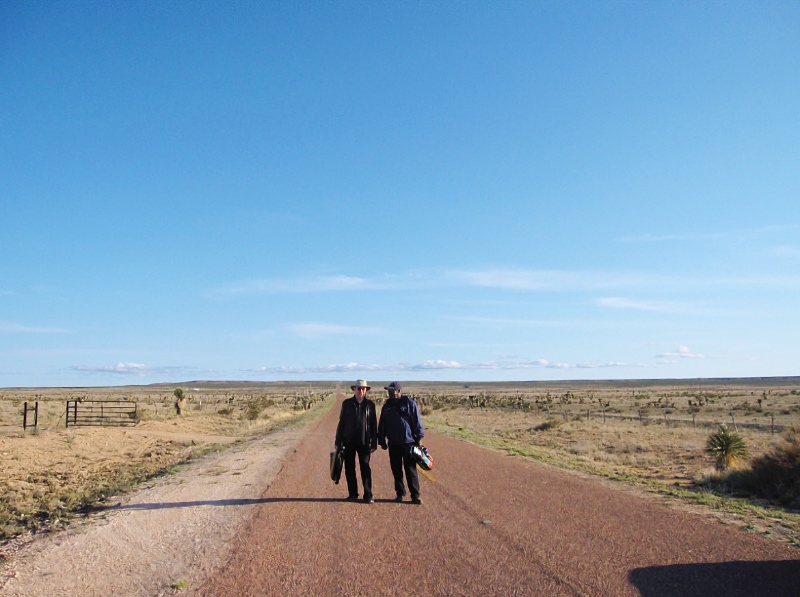
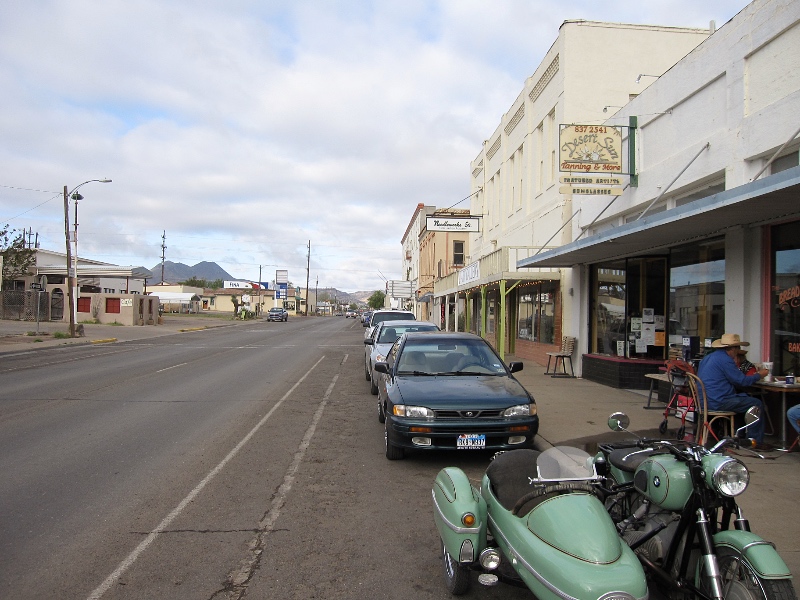
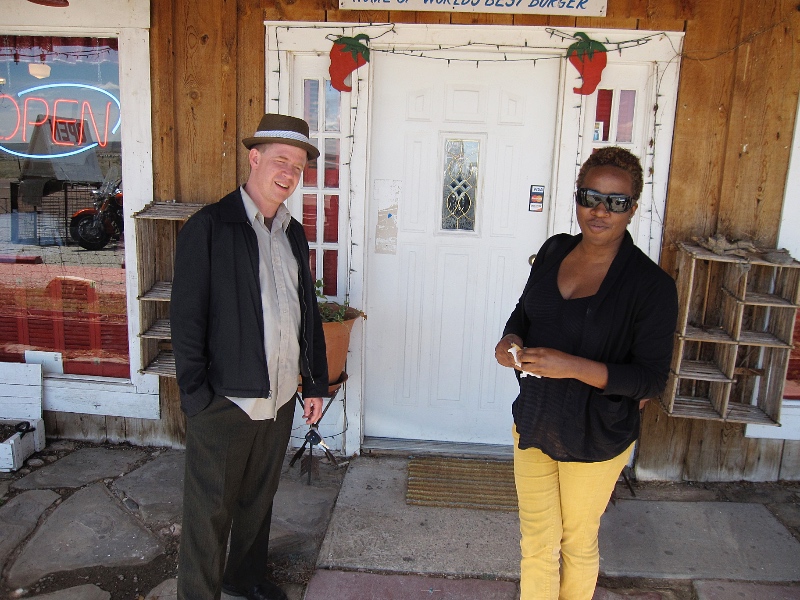
It was a welcome day when the phone rang and Dave Dove, of Nameless Sound, invited Butcher to Texas for two special events with Joe McPhee. Playing solos amongst Dan Flavin's flourescent light sculptures in Houston, then travelling west for a duet performance at James Magee’s extraordinary “The Hill” in the vast Chihuahuan desert.
Under the huge skies of the rock-strewn and treeless Texan desert, they played standing and walking on the cruciform shale walkways and inside the giant steel doors of the four buildings full of sculptural works by artist James Magee. As a record, it is one not easily forgotten. A transatlantic duet by two masters of their horns, it rakes the American rock and sky with uncanny musical truth.
Morning Star - Chris Searle.


Chihuahuan desert, West Texas - 2010.

Wire / Free Jazz Blog
Morning Star / Music and More
Tiny Mix Tapes / Downbeat
Sleeve Notes (Dave Dove)
At The Hill Of James Magee

JOE McPHEE: Alto saxophone.
JOHN BUTCHER: Tenor Saxophone.
The story of the enigmatic artist James Magee and his eponymous hill is a fascinating one, and it is easy to understand how it would draw musical iconoclasts like multi-reed instrumentalists Joe McPhee and John Butcher to make the trek to record there. Their performance out in the open at the monument, using two microphones and battery powered equipment at times sounds like well done field recordings, but in truth it is two master improvisers taking inspiration from another artist to create a wonderfully spontaneous work of art.
MUSIC AND MORE - Tim Niland.
1 Sometimes Yes, Sometimes No - 20:51
2 Mine Shaft - 7:24 (JM solo)
3 Paradise Overcast - 5:45 (JB solo)
4 A Forty Foot Square Room - 3:57 (JM solo)
5 Torcello - 5:44 (JB solo)
6 St. Ida's Breath (Less Her Neck And Teeth) - 6:10
17 April 2010
Live in the Chihuahuan Desert, West Texas, USA
Recorded: Ryan Edwards
Curated by Dave Dove of Nameless Sound
TROST TR 174
MUSIC AND MORE - Tim Niland
At The Hill Of James Magee
The story of the enigmatic artist James Magee and his eponymous hill is a fascinating one, and it is easy to understand how it would draw musical iconoclasts like multi-reed instrumentalists Joe McPhee and John Butcher to make the trek to record there. Their performance out in the open at the monument, using two microphones and battery powered equipment at times sounds like well done field recordings, but in truth it is two master improvisers taking inspiration from another artist to create a wonderfully spontaneous work of art.
"Sometimes Yes, Sometimes No" is a sprawling nearly twenty one minute lead-off track, featuring long abstract tones of saxophones in space, evoking the enormous landscape they are playing in, by separating themselves and playing in two separate buildings simultaneously. Each saxophone is represented in a separate channel and we hear the musicians walk about the monument improvising, with the assembled audience between the buildings, quite an audacious experiment in sound and recording different for the live audience and record listener.
The next four tracks are alternating solo statements from the musicians and the finale is a duet.
Solo perhaps alto saxophone "Mine Shaft" has slow and mostly high pitched playing that is very spare and patient and thoughtfully played. It is presented to the listener as a narrative, a thematic offering with a melodic center that is accessible and absorbing. "Paradise Overcast" uses pops against the reed echoing through the microphone and creating a very interesting sound, one that is percussive, followed by long raw sounds which move in an all together different direction. Short, but exciting "A Forty Foot Square Room" uses a rising and falling scouring and exciting solo that moves in and out, forward and back, creating a sense of continuous motion and doppler like effect. "Torcello" sounds like tenor saxophone with brief honks juxtaposed against fast filigrees of saxophone improvisation. Sandpapery toned sounding real like life and the sum of a life's worth of knowledge with the use of space and patience creating long tones of circular breathing spiraling out as relativistic jets of pure sound.
The two regroup for the final duet "St. Ida's Breath (Less Her Neck and Teeth)" using fluttering sounds and quiet percussive pops, questioning tones and delicate stray squawks. They eventually raise their voices into song, breathing deeply together in a parallel formation that leads to a much deserved round of applause from the audience.
DOWNBEAT - Dustin Krcatovich
At The Hill Of James Magee
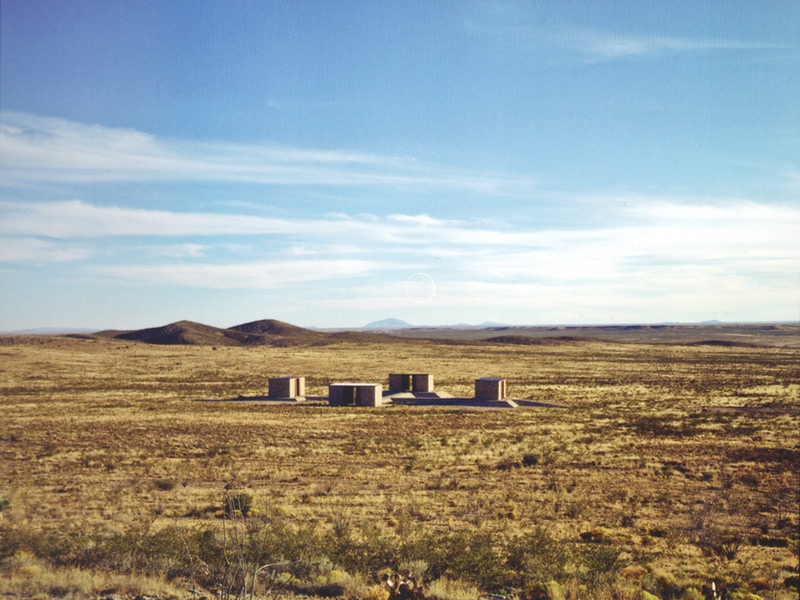
Given the respective reputations of saxophonists Joe McPhee and John Butcher in the field of outer limits sound exploration, it’s fitting that At The Hill Of James Magee, a 2010 recording just now seeing release, finds the duo collaborating—for the first time—not just on the edges of sound, but near the edge of civilization. The titular structure, consisting of four buildings connected by a series of paths, where this album was recorded is a quasi-fortress in West Texas’ Chihuahuan Desert.
That both players are aggressive in exploring the unique acoustic opportunities should almost go without saying. The opener, “Sometimes Yes, Sometimes No,” uses space most explicitly, with each saxophonist traversing the monument’s long walkways and the recorded stereo spectrum, crossing each other’s path and ending opposite where they started.
The alternating solo tracks that follow aren’t as explicit in this regard, but still impacted by space. Unconventional locales are Butcher’s bread and butter, and he bounces percussive blurts and hard-angled tenor trills against The Hill’s natural slapback. McPhee’s alto is a more tender thing, even at its most oblique. But he’s no slouch when it comes to letting his tone dance off Magee’s iron doors and shale rock. The album ends with a shorter duet, “St. Ida’s Breath (Less Her Neck And Teeth),” a tune as pensive as it abstract, the desert wind serving as a tentative collaborator.
Dedicated fans of either player won’t be too surprised by what they do together here. Nor will they be disappointed. Like any great improvisers, McPhee and Butcher are as much masters of deep listening as they are of extended techniques, and here, they bring all those skills to bear.
HOUSTON PRESS - Brittanie Shey
Aftermath: Sax Virtuosos John Butcher And Joe McPhee's Installation Sound
Aftermath has never been to a concert at Richmond Hall, but Nameless Sound, Houston's contemporary music showcase and non-profit, has had a few shows in the hall on the south side of The Menil Collection's campus. Wednesday night's event featured two internationally-known jazz saxophonists - John Butcher, from Brighton, England, and Joe McPhee, from New York. And while the bowling alley-like Richmond Hall seems like a spectacular venue for a show, the reality is that, without any kind of insulation, every little chair shift, sniffle and throat-clearing echoed through Dan Flavin's neon installation art. Aftermath had to take off our sandals to walk around and get pictures during the performances because our soles were slap-slap-slapping on the bare concrete floor. But when it comes to improvisational jazz, maybe the ambient noise is part of the performance?
Butcher plays sax like a layer cake - it amazed Aftermath that so many different levels of sound can come from one man and one instrument. His Web site shows an image of him playing in what looks like another gallery, and says that Butcher has recently started exploring site-specific musical acoustics, in which case the Nameless Sound gig makes a lot of sense. Installation art meets installation sound. Aftermath doesn't know a lot about improvisational jazz but we wonder how much the feedback loop of a venue and an audience factors into the on-stage improvisational act of making music. Last night's audience was calmly receptive, listening quietly and stoically, some people with their eyes closed, until each piece ended, allowing them to break out in vibrant applause. Interestingly, Butcher started life as a traditional jazzist who was dubious about the value of improvisational music. But he played in a few bands with his brother (who toured with Iggy Pop) inspired by groups like the Mothers of Invention and Soft Machine, and the more he improvised the more he took to it. So it's easy to see how he'd be able to convert skeptics in the audience. Towards the end of his set he was playing so fiercely he had to get down on his knees in front of the crowd.
During intermission we ran into Lucas Gorham of Grandfather Child. "I really hope you like Joe McPhee," he said. "He's awesome."
Later, when McPhee took his place in front of the audience, he said "I really want to thank John Butcher for the sonic exorcism. He's just so amazing." The Nameless Sound show was the first the two had played together. Saturday, they'll travel to the "vast West Texas desert" to perform at The Hill in Cornudas, Texas. That show is also presented by Nameless Sound.
McPhee started his set with a pocket trumpet, playing siren songs like a mourning woman, music sounding very much like murmured voices, or like a mocking bird echoing in the same register. Later he switched to sax and Aftermath made a list of all the sounds imitated by McPhee's instruments -- winds, whistles, foghorns, a didgeridoo. It was easy to listen to McPhee go off on musical tangents because for each song he'd always come back to the same percussive thread or pattern.
One of Aftermath's favorite things in music are the unintended artifacts -- fingers sliding across bass strings, cracks in Ian Astbury's voice. McPhee uses the sound of his fingers on the valves as its own percussion, and the intimacy of Richmond Hall was so rich that the 150 or so people in the crown could hear every breath he'd take. The sax has such range - it's often relegated to a backing instrument, so it was refreshing to hear it solo and hear two musicians explore the limits of what the instrument can do.
FREE JAZZ BLOG - Eyal Hareuveni
At The Hill Of James Magee
The first ever meeting of master sax players - American Joe McPhee and British John Butcher happened in April 17, 2010 in the middle of nowhere. McPhee and butcher played at The Hill, located 70 miles east of El Paso, Texas, deep in the the Chihuahuan desert, where enigmatic artist James Magee - a painter, sculptor, poet, film and video maker, has been building, over the last three decades, four identical buildings connected by causeways, crafted of irregularly-cut shale rock, spreading over 2,000 acres of desert land. Magee's work on The Hill is supposed to conclude around 2030. Only a handful of people have visited The Hill and photographing it is strictly forbidden.
McPhee and Butcher played at The Hill on a dry and windy afternoon, before about 70 people who did the tasking pilgrimage to the unique site. Their set transforms the intensity of The Hill into a profound, ceremonial-spiritual experience. Any performance in this forces the musicians to play, actually collaborate, with the voices of the desolated landscape, the architecture and rare acoustics of The Hill, as well as in relation to its emotional weight and the unfathomable dedication of Magee to this place.
The set began with the 20-minutes “Sometimes Yes, Sometimes”. McPhee plays the alto sax inside the North building and Butcher plays the tenor sax inside the South Building, each of these buildings is five meter high and full of sculptors and installations by Magee. The whole set was captured by two microphones, located outside the buildings and recording into battery-powered equipment, as The Hill is far from the local electric grid. At one point, McPhee and Butcher exit the buildings, continue playing as they walk to the opposite structure, passing each other at the center of the cruciform walkway. McPhee and Butcher alternated solo on the next shorter, five pieces, played on the walkway, elevated three meters above the ground.
McPhee and Butcher opt for a reserved and sparse tone, as The Hill natural reverberations proved to be a powerful, open-air echo chamber to reckon with. Often both sound reverential and contemplative, stressing brief silences, but on few occasions they burst with emotional, fiery cries. Both McPhee and Butcher responded subtly to each solo pieces but avoided explicit comments. Their short solo pieces emphasized McPhee’s hypnotic, emotional urgency and Butcher’s innovative. percussion ideas. They conclude this magnificent set with the serene and playful duet, “St. Ida's Breath (Less Her Neck And Teeth)”.
TINY MIX TAPES - Mike Reid
At The Hill Of James Magee
What’s better than two avant-garde musicians of superlative accomplishment choosing to collaborate for a brand new album? Try inserting a mysterious venue into the mix. And I’m not (despite what you might think) talking about the secret mascot sex dungeon that exists several stories below the castle in Disney’s Magic Kingdom. That dark and suspiciously slippery location gives new meaning to the phrase “happiest place on Earth” — while The Hill of James Magee exudes both mystery and spirituality. A structure/art installation 70 miles east of El Paso, TX. The Hill consists of four shale buildings connected by causeways; and technically it’s still under construction, even though Magee has hosted visitors and art events for years now. Literally, photos are prohibited, there is no electricity, and people can only arrive via shuttle.
McPhee and Butcher naturally had their respective alto sax and tenor sax in tow when they recently visited The Hill to perform, and their new album At The Hill Of James Magee is as much a trademark exploration of acoustic space as it is a showcase of their improvisational talents. The first track comes from battery recordings as the two players exit and enter separate buildings. Tracks 2 through 6 are a mix of solos and duets, while the audience members were seated on the ground below the walkway, and microphones were placed outside of the buildings.
MORNING STAR - Chris Searle

Imagine if you can a more surprising recording location than that chosen by virtuoso saxophonists John Butcher and Joe McPhee back in April 2010. Unaccompanied, and under the huge skies of the rock-strewn and treeless Chihuahuan desert in Texas, they played standing and walking on the cruciform shale walkways and inside the giant steel doors of the four buildings full of sculptural works by New York artist and architect James Magee, ex-denizen of a New York City junkyard.
The result is the astonishing album At the Hill of James Magee, recorded in situ, and finally released following intensive work on the original recording. It's unique, seemingly expressing not only Magee's vision but the land, soundscapes and history of the US and the world beyond.
"Playing music and working with sound away from the usual environment in which performance is 'consumed' is liberating," Butcher tells me. "People tune into the here-and-now and uniqueness of the situation. It wasn't only land and sky, as Magee's four buildings are very significant.
"They've been slowly making their mark on the desert, even though the desert makes the human presence rather insignificant." The stark surroundings, both outside and inside Magee's structures, impacted on the way the duo played. "Inside, the large metal frames and sculptures made from a mix of hard industrial and delicate organic materials created an intimacy which affected our playing," Butcher explains. "On the track Sometimes Yes, Sometimes No we sensed that intimacy, while on Paradise Overcast you can hear me making a piece with the echoes of the buildings and on the rest it is the vast outside as we blow into the land and sky."
"Staying in the frontier town of El Paso before the recording, both musicians were strongly affected by what they had seen there. "On the other side of the river border is Ciudad Juarez, which has had some of the most horrendous murders and drug crimes over the last 20 years," Butcher recalls. Seeing the streams of Mexicans crossing the high-security bridge to buy necessities in the US had a powerful influence before they played. Perhaps that is partly the cause of the sense of anguish that their horns express on the recording. From his first recording, Underground Railroad in 1968, McPhee's notes have radiated with the truth of what US "civilisation" has done to its earth, rock, cities and people all through his defiant musical life. Brighton-born Butcher's empathetic sounds make common cause with his American partner. "I'm always amazed," he says, "how it's possible to play for the first time and with no talk about the proposed music with a musician from a quite different culture and history. "It demonstrates something about the power of this approach to improvisation, about being open but also staying yourself."
Butcher has recorded in some unlikely locations before, including "some unusual places in the Orkneys" but never one as compelling as "on that special day on the hill of James Magee." As a record, it is one not easily forgotten. A transatlantic duet by two masters of their horns, it rakes the American rock and sky with uncanny musical truth.
© 2024